After a Leak: Handling a Wet Wall or Ceiling in Chanute
Water inside a wall or ceiling rarely looks as bad as it is. By the time a mark appears, the board, the insulation and the studs behind it have generally been damp for days. This guide sets out the order that stops a leak from snowballing into a bigger repair: make the room safe, halt the water, dry the bay, measure the moisture, and only then decide what comes out.
While it's still dripping, what is the first move?
Head to the breaker panel and cut power to every light, fan and outlet in the affected area. With a ceiling bulging, that comes ahead of anything else, followed by keeping everyone from standing beneath it. If a pipe or appliance is to blame, turn its supply valve or the whole-house shutoff; when the roof is, catch the drip and keep it off the flooring.
Pull furniture, electronics and rugs out of the drip path. Water left sitting on hardwood or soaking into carpet padding turns into a separate repair.
Which drying setup actually pulls water out of a wall cavity?
Remove baseboard from wet walls and, when the board is already slated for replacement, open the lower section so air can circulate behind it. Air movers blowing across the surface and a dehumidifier running behind a shut door beat an open window on a muggy afternoon.
Chanute's humid subtropical summers stretch this out. In July or August, figure on several days of equipment running and empty the dehumidifier bucket often. In winter, gentle furnace heat helps, but keep space heaters well away from anything wet.
Meter or no meter: how do you know the board has dried?
A moisture meter, pin-type or pinless, sold or rented at most hardware stores, gives the straight answer. Take a baseline on a wall that never got wet, then compare. The damp wall counts as dry once its numbers fall to match.
Lacking a meter, watch for board that feels cold or spongy under the thumb, blistered paint, a stain border that keeps advancing, and a musty smell. Any of those says the bay isn't ready to close.
Which wet materials get cut out, and which can be kept?
- Spongy, crumbling or drooping gypsum is removed; softened board never regains its strength.
- Board that held water beyond a day or two, or got soaked by groundwater or sewage, is generally replaced.
- Soggy insulation comes out too, because it presses moisture against the studs for weeks.
- Board briefly wetted by clean water that reads dry within a day or two can often remain, then gets a blocking primer.
- Outside corners deserve a close look: mud crumbling off a metal corner bead hints the bead may rust, so it is swapped out instead of skimmed over.
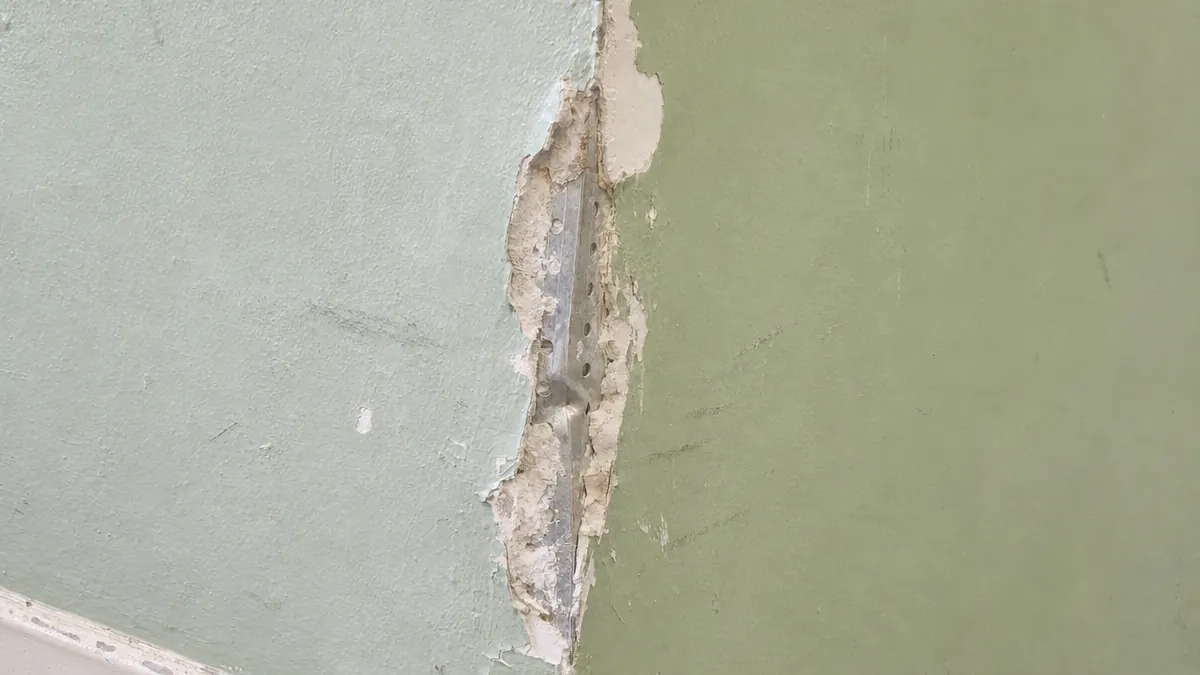
When the call is unclear, a small inspection hole cut low on the wall is a safer bet than sealing a bay that may still be damp. That opening gets patched along with everything else.
What belongs in the written record before demolition?
Ahead of any tear-out, photograph each damp area from across the room and up close with a tape measure in view, and log when the water started and when it ended. If an insurance company or a property owner will be involved, keep those notes and receipts in one folder.
When can the drywall side of the repair be booked?
With the leak repaired and every reading back to normal, rebuilding can start. For a lower wall hit by groundwater, the basement water damage page explains where the cut line goes and which panels replace the old ones. For a ringed or drooping ceiling, the ceiling stain page walks through sealing and texture matching.